

The States of Jersey are currently proposing the introduction of the Fire Safety (Tall Residential Buildings) (Jersey) Regulations.
If approved, these Regulations will apply to residential buildings over 11 metres in height containing two or more dwellings. In practical terms, this includes most blocks of flats of around five storeys or more.
Approximately 140 buildings across the Island fall within this category, affecting an estimated 8,500 residents.
This represents a significant shift in how fire safety is managed locally.
For the first time, Jersey will introduce a legal framework that applies to these buildings after they are occupied, rather than relying solely on standards at the point of construction.
The Regulations are expected to come into force in April 2027, subject to approval, giving building owners and managing agents time to prepare.
While the Regulations themselves are relatively focused, they are part of a much wider change in how fire safety is likely to be approached across the Island.
Taller residential buildings present a different level of risk in the event of a fire.
As height increases, so does the number of occupants, while the ability of the Fire and Rescue Service to carry out rescues from outside the building becomes more limited. In most cases, external rescue is not feasible beyond the lower storeys.
This places far greater reliance on the building itself to perform as intended, particularly in terms of compartmentation, fire doors, and internal firefighting provisions.
For that reason, these buildings are being prioritised.
At their core, the proposed Regulations are not introducing anything particularly complicated. What they are doing is formalising a set of basic but important measures that ensure buildings are understood, maintained, and capable of performing as expected in the event of a fire.
In practice, those responsible for a building will need to make sure that clear and accurate information about it is available to the Fire and Rescue Service. This means having up-to-date floor plans and a simple overview of the building layout, including where key systems and access points are located. That information must also be physically available on site, usually in a secure box that firefighters can access quickly when they arrive.
There is also a clear focus on making sure that the systems already installed in a building actually work when they are needed. It is not enough for equipment to be present. Smoke control systems, rising mains, firefighting lifts, and any suppression systems must be checked regularly and maintained so they can be relied upon during an incident.
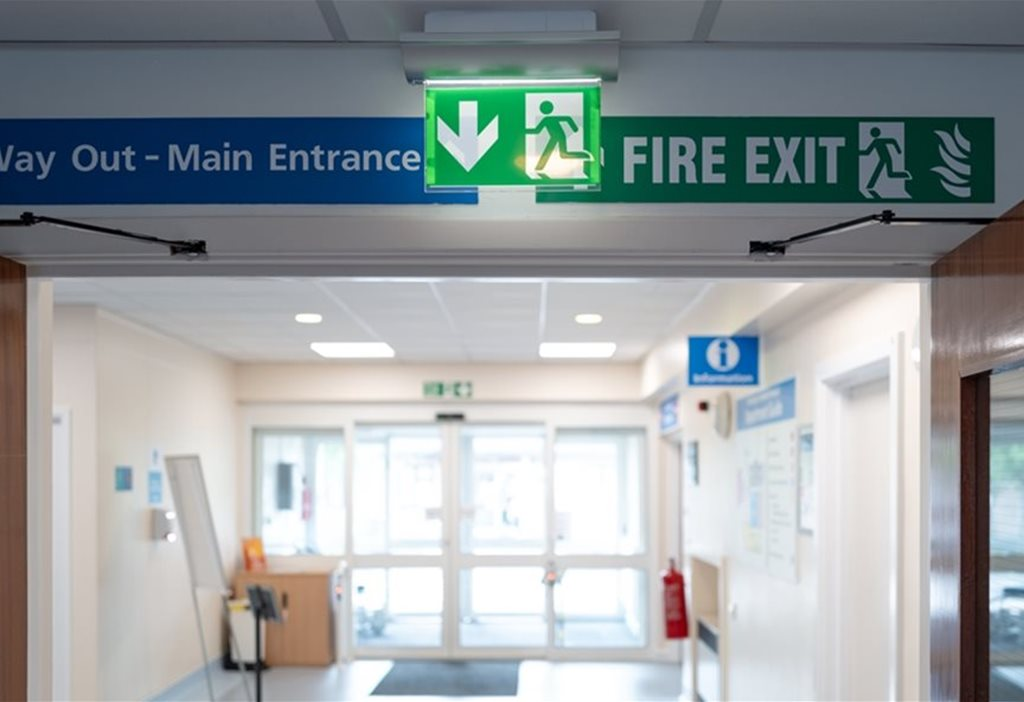
The Regulations also place importance on visibility and communication. Buildings will need clear signage so firefighters can easily identify floors and navigate their way through the building, even in low visibility. At the same time, residents must be given straightforward information about what to do in the event of a fire, including the role of fire doors and why they must not be interfered with.
Fire doors themselves are a key part of the overall fire safety strategy, and the Regulations place a clear requirement on those responsible for buildings to check them regularly.
In simple terms, communal fire doors are expected to be checked every three months, with flat entrance doors checked at least once a year. These checks are intended to confirm that doors close properly, that self-closing devices are working, and that there is no obvious damage.
At first glance, this sounds straightforward.
However, the Regulations do not prescribe who should carry out these checks, only that they are completed and that any faults are addressed.
In practice, this means the responsibility sits with the Responsible Person to ensure that whoever is carrying out the checks is capable of identifying issues that could affect performance in a fire.
There is a significant difference between a basic visual check and a competent assessment of a fire door. A door may appear to function correctly, but still fail to perform as required due to issues with installation, gaps, seals, or hidden defects.
This creates an important decision for building owners and managing agents. Checks can be carried out in a number of ways, ranging from in-house staff to specialist contractors. Each approach comes with different levels of cost and, importantly, different levels of assurance.
Ultimately, the decision should not be based solely on cost, but on confidence that the doors will perform as intended in the event of a fire. If an incident were to occur, the focus would not simply be on whether checks had been completed, but whether they were sufficient.
Taken together, these requirements represent a clear shift. Fire safety is no longer something that can be assumed based on how a building was originally constructed. It now needs to be actively managed, checked, and maintained.
One of the most important aspects of the Regulations is identifying who the Responsible Person actually is.
In many cases this will be the building owner. However, depending on how a building is structured, responsibility may sit across multiple parties, including managing agents and others who have control over specific aspects of the premises.
The Regulations make it clear that where responsibilities are shared, those involved must cooperate and coordinate to ensure the requirements are met.
What is equally clear is that responsibility cannot be avoided. Where there is control, there is accountability.
Some building owners and managing agents may already have been contacted or visited by UK-based consultants working alongside the Fire and Rescue Service.
These visits are part of an evidence-gathering process, not enforcement.
Before introducing wider requirements, including any future fire risk assessment framework, the authorities need to understand what actually exists across the Island. That includes identifying the buildings in scope, understanding what fire safety measures are already in place, and determining how far those buildings are from a consistent standard.
Introducing legislation without understanding the scale of the task, or the capacity to deliver it, would create confusion and inconsistency. This stage is about ensuring that any future framework is realistic and workable.
In England, fire safety is supported by a legal requirement to carry out fire risk assessments on most buildings. Jersey does not currently operate under an equivalent framework.
There is clear direction of travel towards introducing something similar, but doing so immediately would present practical challenges.
The most significant of these is capacity.
There are currently limited resources on the Island to deliver a large-scale programme of fire risk assessments across all applicable buildings. Even with local providers undertaking a significant proportion of the work, the volume required under a full legal framework would be substantial.
If introduced too quickly, this would likely lead to increased reliance on external consultants, with varying standards and differing interpretations of how UK-based guidance aligns with Jersey’s legal position.
For that reason, the current approach focuses on introducing targeted, achievable measures first, while building a clearer understanding of the wider landscape.
For many building owners and managing agents, the key concern is not whether changes are coming, but how they will be managed in practice.
Some buildings will already meet a number of the proposed requirements. Others will require more significant work, particularly where fire protection measures have deteriorated or been altered over time.
This raises a practical question.
What happens where full compliance cannot be achieved immediately?
At this stage, details around enforcement, timescales, and how compliance will be phased are still being developed. A risk-based approach is the most likely outcome, with higher-risk buildings addressed first.
However it is implemented, consistency will be important. Confidence in the system will depend on how clearly expectations are set and how fairly they are applied across different buildings.
The Regulations also introduce formal enforcement powers. Where requirements are not met, the Fire and Rescue Service will initially seek to resolve issues through guidance and informal action. However, this can escalate to formal notices and, ultimately, prosecution where failures place people at risk.
Alongside regulatory changes, there has been increased discussion around evacuation strategies, particularly “stay put” or defend in place approaches.
A stay put strategy is based on the principle that residents remain within their flats unless directly affected by fire. When supported by effective compartmentation and robust passive fire protection, this can be a safe and appropriate approach.
It is often recommended by the Fire and Rescue Service.
However, it is important to understand that this is a recommendation, not a directive.
The responsibility for deciding whether a stay put strategy is appropriate sits with the Responsible Person or managing agent.
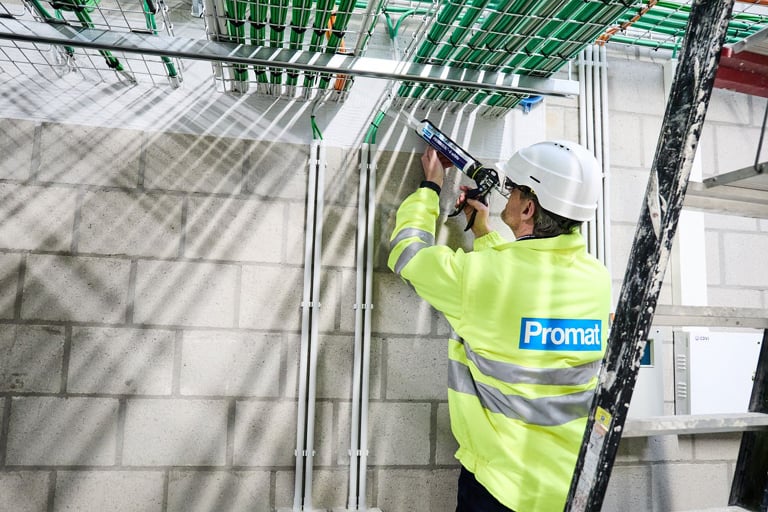
For such a strategy to be suitable, there must be a high level of confidence in the building’s ability to contain fire within individual compartments. That includes confidence in walls, floors, fire doors, and the often unseen elements such as fire stopping around services.
Where that level of confidence does not exist, the strategy should be carefully reconsidered.
Ultimately, responsibility for that decision cannot be passed on.
Although the Regulations are not yet in force, the direction is clear.
If you are responsible for a building that may fall within scope, this is the time to understand what you have, rather than relying on assumptions. That means identifying any gaps in fire protection, reviewing how the building is currently managed, and considering whether existing arrangements are still appropriate.
In many cases, the starting point is simply gaining a clear, independent understanding of how a building currently performs.
Some improvements can be made quickly, while others may require time, coordination, and funding. Waiting until formal enforcement begins is unlikely to be the most effective approach.
The proposed Regulations are a first step, not a complete solution.
They introduce practical measures that will improve fire safety in taller residential buildings, but they also signal a broader shift towards ongoing responsibility and accountability.
It is also important to recognise that these Regulations are not intended to be the final position. They are being introduced as an initial, targeted step while wider fire safety legislation in Jersey is reviewed and developed. Further requirements, including a broader fire risk assessment framework, are likely to follow.
One of the key risks during this transition is the assumption that compliance on paper equates to safety in practice. In reality, the effectiveness of these measures will depend on how well they are understood, implemented, and maintained.
Handled properly, this transition will raise standards and provide greater clarity for those responsible for buildings.
Handled poorly, it risks inconsistency and confusion.
The difference will come down to how well the changes are understood and how proactively they are managed.